
Whisk_184646ed7f

Understanding Tax Compliance in Nigeria: A Guide for SMEs

Navigating Nigeria’s tax landscape can be challenging for small and medium enterprises (SMEs). With multiple tax obligations and evolving regulations, staying compliant while optimizing your tax position requires careful planning and understanding.

Key Tax Obligations for Nigerian SMEs

1. Companies Income Tax (CIT)

All Nigerian companies are subject to CIT at a rate of 30% on their profits. However, small companies with a turnover of N25 million or less benefit from a reduced rate of 20%. It’s crucial to understand what qualifies as taxable income and available deductions.

2. Value Added Tax (VAT)

VAT is charged at 7.5% on most goods and services. Companies with annual turnover exceeding N25 million must register for VAT. Understanding input VAT recovery and output VAT obligations is essential for cash flow management.

3. Pay As You Earn (PAYE)

Employers must deduct PAYE from employee salaries using the prescribed tax tables. Failure to remit PAYE on time attracts penalties and interest charges.

4. Withholding Tax (WHT)

Companies making certain payments must deduct WHT at prescribed rates. This includes payments for contracts, professional services, rent, and dividends.

Common Compliance Challenges

Record Keeping: Maintaining proper books of account is fundamental to tax compliance. Electronic records are now acceptable, but they must be complete and accurate.

Filing Deadlines: Missing filing deadlines results in penalties. Company income tax returns are due 6 months after the accounting year-end, while VAT returns are due monthly.

Multiple Tax Authorities: SMEs often deal with Federal Inland Revenue Service (FIRS), State Internal Revenue Service, and Local Government Area tax collectors. Understanding jurisdictional boundaries is crucial.

Best Practices for SME Tax Compliance

  1. Implement Robust Accounting Systems: Use accounting software that can generate tax-compliant reports and maintain audit trails.
  2. Regular Tax Health Checks: Conduct periodic reviews of your tax position to identify potential issues early.
  3. Professional Advisory: Engage qualified tax advisors to navigate complex regulations and optimize your tax position.
  4. Staff Training: Ensure your accounting team understands current tax requirements and filing procedures.
  5. Documentation: Maintain comprehensive records of all transactions, including supporting documents for claims and deductions.

Recent Developments

The Finance Act 2023 introduced several changes affecting SMEs, including digital tax initiatives and modified VAT registration thresholds. Companies should review their compliance procedures to align with these changes.

Conclusion

Tax compliance doesn’t have to be overwhelming. With proper planning, systems, and professional guidance, SMEs can maintain compliance while optimizing their tax positions. The key is to view tax planning as an ongoing business process rather than an annual event.

For personalized tax advisory services tailored to your business needs, contact Matthew Salako & Co. Our team of qualified tax practitioners can help you navigate Nigeria’s complex tax landscape with confidence.

Whisk_4ab2d2acaf

The Importance of Regular Financial Audits for Business Growth

Financial audits are often viewed as a compliance requirement, but they offer far more value than mere regulatory adherence. Regular audits can be powerful tools for business growth, risk management, and strategic decision-making.

What is a Financial Audit?

A financial audit is an independent examination of a company’s financial statements and underlying records. The auditor expresses an opinion on whether the financial statements present a true and fair view of the company’s financial position and performance.

Benefits Beyond Compliance

1. Enhanced Credibility and Trust

Audited financial statements provide stakeholders with confidence in your company’s financial reporting. This credibility is crucial when:

  • Seeking bank loans or credit facilities
  • Attracting investors or partners
  • Bidding for contracts with large corporations
  • Building relationships with suppliers and customers

2. Risk Identification and Mitigation

Auditors don’t just verify numbers; they evaluate internal controls and business processes. This assessment helps identify:

  • Weaknesses in financial controls
  • Operational inefficiencies
  • Potential fraud risks
  • Compliance gaps

3. Management Letter Insights

Beyond the audit opinion, auditors provide management letters highlighting areas for improvement. These recommendations often include:

  • Process optimization suggestions
  • Internal control enhancements
  • Technology upgrade recommendations
  • Best practice implementations

Strategic Value for Growth

Access to Capital

Banks and investors typically require audited financial statements before providing funding. Regular audits ensure you’re always “investment-ready” and can capitalize on growth opportunities quickly.

Performance Benchmarking

Audited financials provide reliable data for:

  • Industry comparisons
  • Performance trend analysis
  • Key performance indicator tracking
  • Strategic planning inputs

Merger and Acquisition Readiness

Companies with clean audit histories are more attractive to potential acquirers and can command better valuations. Regular audits also streamline due diligence processes.

Types of Audits for Different Needs

Statutory Audits

Required by law for certain companies, focusing on compliance with accounting standards and regulations.

Internal Audits

Regular reviews of internal processes and controls to ensure operational efficiency and risk management.

Special Purpose Audits

Targeted audits for specific purposes such as grant compliance, contract audits, or fraud investigations.

Choosing the Right Audit Partner

Selecting an experienced audit firm is crucial. Consider:

  • Industry expertise and experience
  • Professional qualifications and registrations
  • Technology capabilities and audit methodologies
  • Communication style and client service approach
  • Value-added services beyond basic audit requirements

Maximizing Audit Value

To get the most from your audit:

  1. Prepare thoroughly: Organize records and documentation in advance
  2. Engage actively: Participate in planning discussions and ask questions
  3. Implement recommendations: Act on management letter suggestions
  4. Use insights strategically: Leverage audit findings for business improvement

Conclusion

Regular financial audits are investments in your business’s future. They provide the credibility, insights, and risk management foundation necessary for sustainable growth. Don’t view audits as mere compliance exercises – embrace them as strategic tools for business success.

At Matthew Salako & Co, we provide comprehensive audit and assurance services designed to add real value to your business. Our experienced team combines technical expertise with industry knowledge to deliver audits that drive business improvement.

Whisk_zcwmznkztc

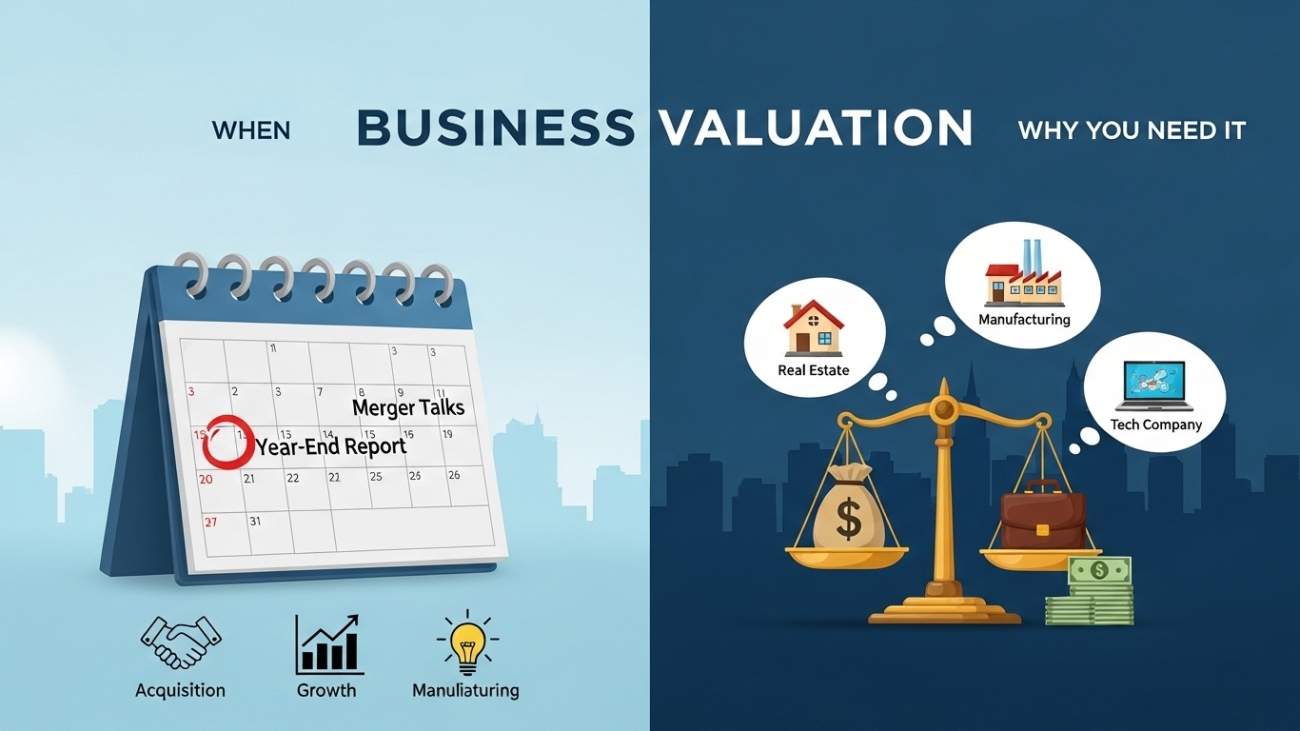
Business Valuation: When and Why You Need It

Business valuation is the process of determining the economic value of a business or company. Whether you’re planning to sell, seeking investment, or making strategic decisions, understanding your business’s true worth is crucial for success.

When Do You Need a Business Valuation?

1. Selling Your Business

When preparing to sell, a professional valuation provides:

  • A realistic asking price based on market conditions
  • Negotiation leverage with potential buyers
  • Documentation to support your pricing decisions
  • Insights into value drivers and areas for improvement

2. Seeking Investment or Funding

Investors and lenders require credible valuations to:

  • Assess investment risk and return potential
  • Determine appropriate equity stakes
  • Structure financing arrangements
  • Compare investment opportunities

3. Partnership Changes

When partners join, leave, or change ownership percentages, valuations ensure:

  • Fair treatment of all parties
  • Transparent transaction pricing
  • Compliance with partnership agreements
  • Proper documentation for legal and tax purposes

4. Estate Planning and Succession

For family businesses and estate planning:

  • Determine inheritance values for tax purposes
  • Plan ownership transitions
  • Structure buy-sell agreements
  • Ensure equitable distribution among heirs

5. Legal and Compliance Requirements

Valuations may be required for:

  • Divorce proceedings involving business assets
  • Shareholder disputes and litigation
  • Tax compliance and reporting
  • Financial reporting under IFRS

Common Valuation Methods

1. Asset-Based Approach

Book Value Method: Based on the company’s balance sheet, adjusted for market values of assets and liabilities.

Liquidation Value: Estimates the value if the business were to be liquidated immediately.

2. Income Approach

Discounted Cash Flow (DCF): Projects future cash flows and discounts them to present value using an appropriate discount rate.

Earnings Multiples: Applies industry-standard multiples to normalized earnings or EBITDA.

3. Market Approach

Comparable Company Analysis: Compares the business to similar publicly traded companies.

Transaction Multiples: Uses data from recent sales of similar businesses.

Factors Affecting Business Value

Financial Performance

  • Revenue growth trends
  • Profitability and margins
  • Cash flow generation
  • Working capital efficiency
  • Debt levels and capital structure

Market Position

  • Market share and competitive advantages
  • Customer base diversity and loyalty
  • Brand strength and reputation
  • Industry growth prospects

Operational Factors

  • Management quality and depth
  • Business model sustainability
  • Asset quality and utilization
  • Technology and innovation capacity
  • Regulatory environment and compliance

The Valuation Process

1. Initial Assessment

Understanding the purpose of the valuation, business model, and industry context.

2. Financial Analysis

Comprehensive review of historical financials, normalizing adjustments, and quality of earnings analysis.

3. Market Research

Industry analysis, competitive positioning, and market multiple research.

4. Valuation Modeling

Application of appropriate valuation methods and sensitivity analysis.

5. Report Preparation

Detailed valuation report with methodology, assumptions, and conclusions.

Maximizing Your Business Value

Financial Optimization

  • Improve profit margins through cost management
  • Diversify revenue streams
  • Optimize working capital
  • Maintain clean financial records

Operational Excellence

  • Strengthen management systems
  • Invest in technology and innovation
  • Build strong customer relationships
  • Develop key employee retention strategies

Strategic Positioning

  • Differentiate from competitors
  • Expand market presence
  • Build scalable business processes
  • Protect intellectual property

Common Valuation Mistakes to Avoid

  • Overreliance on rules of thumb: Industry multiples should be starting points, not final answers
  • Ignoring market conditions: Valuations fluctuate with economic cycles
  • Inadequate due diligence: Thorough analysis is essential for accurate valuations
  • Emotional pricing: Personal attachment can cloud objective assessment
  • Poor timing: Market timing can significantly impact valuation outcomes

Working with Valuation Professionals

Choose valuers with:

  • Relevant industry experience
  • Professional qualifications and certifications
  • Understanding of your specific needs
  • Track record of credible valuations
  • Knowledge of current market conditions

Conclusion

Business valuation is both an art and a science. While financial models provide the framework, experience and judgment are essential for accurate assessments. Whether you’re planning a transaction or making strategic decisions, professional valuation services provide the insights needed for informed decision-making.

At Matthew Salako & Co, we combine rigorous analytical methods with deep industry knowledge to deliver valuations that stand up to scrutiny and serve your business objectives. Our experienced team understands the Nigerian business environment and provides valuations that reflect local market realities.

Whisk_f510585544

Corporate Governance Best Practices for Nigerian Companies

Corporate governance encompasses the systems, processes, and structures that direct and control companies. In Nigeria’s evolving business landscape, strong governance practices are essential for building stakeholder confidence, accessing capital markets, and ensuring sustainable growth.

The Nigerian Corporate Governance Framework

Nigerian companies operate under multiple governance regulations:

  • Companies and Allied Matters Act (CAMA) 2020
  • Securities and Exchange Commission (SEC) Code of Corporate Governance
  • Central Bank of Nigeria (CBN) guidelines for financial institutions
  • Nigerian Stock Exchange (NSE) listing requirements
  • Financial Reporting Council of Nigeria (FRCN) standards

Board Structure and Composition

Board Independence

Effective boards require the right balance of independence and expertise:

  • At least one-third of directors should be independent
  • Independent directors bring objectivity and external perspectives
  • Clear criteria for director independence must be established
  • Regular assessment of director independence is essential

Diversity and Skills

Boards should reflect diverse backgrounds and complementary skills:

  • Industry expertise and business experience
  • Financial literacy and audit experience
  • Risk management knowledge
  • Technology and digital transformation understanding
  • Gender, age, and cultural diversity

Board Size and Structure

Optimal board size typically ranges from 7-15 members, depending on company size and complexity. Key considerations include:

  • Ensuring adequate representation without being unwieldy
  • Balancing executive and non-executive directors
  • Separating Chairman and CEO roles where possible
  • Establishing clear role definitions and expectations

Board Committees

Audit Committee

Essential for financial oversight and control:

  • Review financial statements and accounting policies
  • Oversee internal and external audit functions
  • Monitor internal control systems
  • Ensure compliance with financial regulations

Risk Management Committee

Critical for identifying and managing business risks:

  • Develop risk management frameworks
  • Monitor key risk indicators
  • Oversee business continuity planning
  • Review cyber security and data protection measures

Nomination and Remuneration Committee

Ensures proper succession planning and compensation:

  • Board succession planning and recruitment
  • Executive compensation design and benchmarking
  • Performance evaluation frameworks
  • Talent development and retention strategies

Transparency and Disclosure

Financial Reporting

Timely and accurate financial disclosure builds stakeholder confidence:

  • Quarterly and annual financial statements
  • Management discussion and analysis
  • Key performance indicators and metrics
  • Forward-looking information and guidance

Material Information Disclosure

Stakeholders need access to material information affecting company value:

  • Strategic initiatives and major transactions
  • Changes in management or board composition
  • Significant legal or regulatory developments
  • Risk factors and mitigation strategies

Stakeholder Communication

Regular engagement with key stakeholders:

  • Annual general meetings and investor presentations
  • Quarterly earnings calls and updates
  • Website maintenance with current information
  • Social media and public relations management

Internal Controls and Risk Management

Internal Control Systems

Robust internal controls protect company assets and ensure accurate reporting:

  • Segregation of duties and authorization levels
  • Regular internal audits and control testing
  • IT controls and cyber security measures
  • Fraud prevention and detection mechanisms

Risk Assessment and Monitoring

Systematic approach to risk management:

  • Risk identification and assessment methodologies
  • Risk appetite and tolerance frameworks
  • Key risk indicator monitoring
  • Regular risk reporting to board and management

Ethical Standards and Compliance

Code of Conduct

Clear ethical standards guide employee and management behavior:

  • Conflicts of interest policies
  • Anti-corruption and bribery guidelines
  • Whistleblower protection mechanisms
  • Regular training and awareness programs

Regulatory Compliance

Systematic approach to regulatory compliance:

  • Compliance monitoring and reporting systems
  • Regular regulatory updates and training
  • Relationship management with regulators
  • Documentation and record-keeping procedures

Performance Evaluation and Improvement

Board Evaluation

Regular assessment of board effectiveness:

  • Annual board and committee evaluations
  • Individual director performance assessments
  • Third-party evaluation every few years
  • Action plans for improvement areas

Management Performance

Clear performance metrics and accountability:

  • Key performance indicators and targets
  • Regular performance reviews and feedback
  • Succession planning for key positions
  • Executive development and training programs

Implementing Good Governance

Getting Started

Steps for improving corporate governance:

  1. Governance Assessment: Evaluate current practices against best standards
  2. Board Enhancement: Recruit qualified independent directors
  3. Policy Development: Create comprehensive governance policies
  4. System Implementation: Establish monitoring and reporting systems
  5. Training and Awareness: Educate board and management on governance requirements

Common Implementation Challenges

  • Resistance to change from existing management
  • Lack of qualified independent directors
  • Cost and resource constraints
  • Balancing governance with operational efficiency
  • Keeping pace with evolving regulations

Benefits of Strong Governance

  • Improved Access to Capital: Better governance reduces investor risk perceptions
  • Enhanced Reputation: Strong governance builds stakeholder confidence
  • Better Decision Making: Structured processes improve decision quality
  • Risk Mitigation: Systematic risk management protects company value
  • Regulatory Compliance: Proactive governance prevents regulatory issues

Conclusion

Corporate governance is not just about compliance – it’s about creating sustainable value for all stakeholders. Companies that invest in strong governance practices position themselves for long-term success in an increasingly competitive and regulated environment.

At Matthew Salako & Co, we help companies design and implement governance frameworks that meet regulatory requirements while supporting business objectives. Our corporate services team provides practical guidance for boards and management teams seeking to enhance their governance practices.

Whisk_8aff479ad9

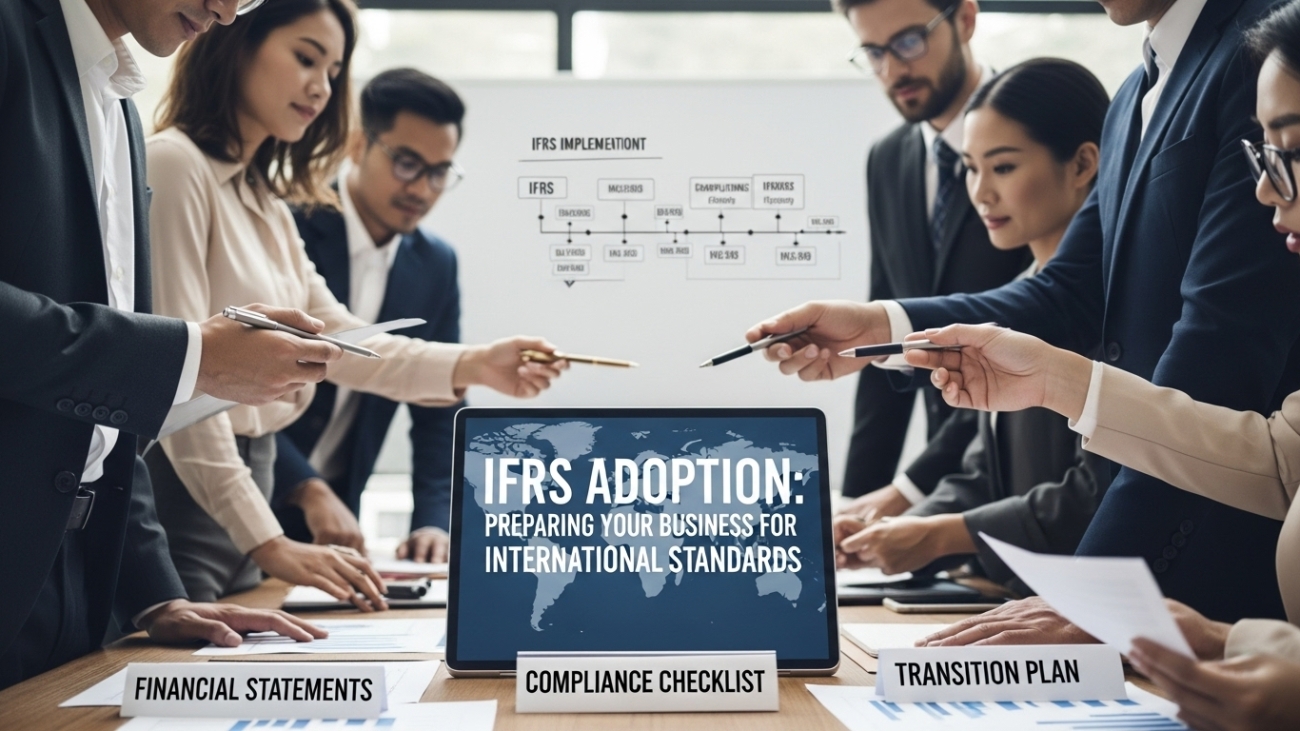
IFRS Adoption: Preparing Your Business for International Standards

International Financial Reporting Standards (IFRS) have become the global language of financial reporting. For Nigerian companies, IFRS adoption is not just about compliance – it’s about accessing international markets, attracting foreign investment, and enhancing financial transparency.

Why IFRS Matters for Nigerian Businesses

Regulatory Requirements

The Financial Reporting Council of Nigeria (FRCN) has mandated IFRS adoption for:

  • Public interest entities (listed companies, banks, insurance companies)
  • Significant public interest entities
  • Large-sized entities meeting specified criteria
  • Medium-sized entities (with option for IFRS for SMEs)

Business Benefits

Beyond compliance, IFRS adoption offers significant advantages:

  • Global Comparability: Financial statements comparable across countries
  • Capital Market Access: Enhanced ability to raise international capital
  • Investor Confidence: Improved transparency builds stakeholder trust
  • Operational Efficiency: Standardized reporting across subsidiaries
  • Professional Development: Enhanced skills for finance teams

Key IFRS Standards and Their Impact

IFRS 15: Revenue from Contracts with Customers

Fundamental changes to revenue recognition:

  • Five-step model for revenue recognition
  • Focus on transfer of control rather than risks and rewards
  • Enhanced disclosure requirements
  • Impact on contract modifications and variable consideration

IFRS 9: Financial Instruments

New approach to financial instrument accounting:

  • Expected credit loss model for impairments
  • Revised classification and measurement categories
  • New hedge accounting requirements
  • Significant impact on banks and financial institutions

IFRS 16: Leases

Major changes to lease accounting:

  • Single lease accounting model for lessees
  • Recognition of right-of-use assets and lease liabilities
  • Impact on key financial ratios
  • Enhanced disclosure requirements

IFRS 17: Insurance Contracts

Revolutionary changes for insurance companies:

  • Consistent measurement model for insurance contracts
  • Current measurement of insurance liabilities
  • Presentation of insurance service results
  • Extensive transition requirements

The IFRS Adoption Process

Phase 1: Assessment and Planning

Impact Assessment

  • Identify applicable IFRS standards
  • Assess impact on financial statements
  • Evaluate systems and process requirements
  • Determine resource needs and timeline

Project Planning

  • Establish project governance and steering committee
  • Develop detailed project plan and milestones
  • Assign roles and responsibilities
  • Set up project communication framework

Phase 2: Design and Development

Accounting Policy Development

  • Develop IFRS-compliant accounting policies
  • Document policy choices and elections
  • Create accounting manuals and guidance
  • Establish approval processes for policy changes

Systems and Process Design

  • Design new financial reporting processes
  • Configure accounting systems for IFRS
  • Develop new reporting templates and formats
  • Create data collection and validation procedures

Phase 3: Implementation and Testing

Parallel Reporting

  • Run parallel IFRS and local GAAP reporting
  • Test system functionality and calculations
  • Validate financial statement line items
  • Reconcile differences between standards

Training and Capacity Building

  • Train finance and accounting teams
  • Educate management on IFRS impacts
  • Develop ongoing training programs
  • Create knowledge management systems

Phase 4: Go-Live and Monitoring

First-Time Adoption

  • Apply IFRS 1 First-time Adoption requirements
  • Prepare opening IFRS balance sheet
  • Document transition adjustments and elections
  • Prepare reconciliation statements

Ongoing Compliance

  • Monitor new IFRS developments and updates
  • Maintain IFRS knowledge and capabilities
  • Ensure consistent application across periods
  • Regular quality assurance and reviews

Common Implementation Challenges

Technical Challenges

  • Complex Standards: Understanding and applying technical requirements
  • Judgment Areas: Making appropriate accounting estimates and judgments
  • System Limitations: Configuring systems to handle IFRS requirements
  • Data Quality: Ensuring accuracy and completeness of financial data

Organizational Challenges

  • Resource Constraints: Limited budget and skilled personnel
  • Change Management: Resistance to new processes and requirements
  • Project Management: Coordinating complex, multi-year projects
  • Timeline Pressure: Meeting regulatory deadlines

Business Impact Challenges

  • Financial Metrics: Changes to key performance indicators
  • Covenant Compliance: Impact on debt covenant calculations
  • Tax Implications: Differences between IFRS and tax accounting
  • Stakeholder Communication: Explaining changes to investors and analysts

Best Practices for Successful IFRS Implementation

Project Management

  • Establish strong project governance with executive sponsorship
  • Use experienced project managers and technical experts
  • Maintain regular communication with all stakeholders
  • Plan for adequate testing and quality assurance

Technical Excellence

  • Invest in comprehensive training and knowledge development
  • Engage external experts for complex technical areas
  • Document all policy choices and implementation decisions
  • Establish robust quality control and review processes

Change Management

  • Communicate benefits and importance of IFRS adoption
  • Involve key stakeholders in planning and decision-making
  • Provide adequate training and support for affected employees
  • Celebrate milestones and recognize contributions

Post-Implementation Considerations

Continuous Improvement

  • Regular assessment of IFRS processes and controls
  • Identification of efficiency opportunities
  • Benchmarking against industry best practices
  • Integration of IFRS requirements into business processes

Staying Current

  • Monitor IASB developments and new standards
  • Participate in professional forums and training
  • Regular assessment of accounting policy appropriateness
  • Maintain technical expertise within the organization

IFRS for SMEs Alternative

For smaller entities, IFRS for SMEs provides a simplified alternative:

  • Reduced disclosure requirements
  • Simplified recognition and measurement principles
  • Less frequent updates than full IFRS
  • Suitable for entities without public accountability

Working with IFRS Implementation Partners

Choose implementation partners with:

  • Deep IFRS technical knowledge and experience
  • Understanding of your industry and business model
  • Project management capabilities and proven methodologies
  • Training and knowledge transfer capabilities
  • Post-implementation support services

Conclusion

IFRS adoption is a significant undertaking that requires careful planning, adequate resources, and strong project management. However, the benefits – including improved financial transparency, enhanced comparability, and better access to capital markets – make it a worthwhile investment.

Success depends on treating IFRS adoption as a business transformation project, not just an accounting exercise. Companies that approach implementation strategically and invest in building internal capabilities will be best positioned to realize the full benefits of international financial reporting standards.

At Matthew Salako & Co, we provide comprehensive IFRS implementation services, from initial impact assessment through go-live support and ongoing compliance. Our experienced team combines technical expertise with practical implementation experience to help companies successfully transition to IFRS.

Whisk_d998888e0a

Maximizing Tax Savings: Legal Strategies for Nigerian Businesses

Tax optimization is a legitimate and essential aspect of business management. When done correctly, it can significantly improve cash flow and profitability while maintaining full compliance with Nigerian tax laws. The key is understanding available opportunities and implementing them strategically.

Understanding Tax Optimization vs. Tax Evasion

Tax Optimization (Legal):

  • Arranging affairs to minimize tax within the law
  • Taking advantage of available incentives and reliefs
  • Timing transactions to optimize tax positions
  • Proper documentation and transparency

Tax Evasion (Illegal):

  • Deliberately concealing or misrepresenting income
  • Claiming false deductions or expenses
  • Failing to register for required taxes
  • Using artificial schemes to avoid tax

Companies Income Tax (CIT) Optimization

Capital Allowances

Maximize deductions for capital expenditure:

  • Initial Allowance: 50% for manufacturing equipment, 25% for other assets
  • Annual Allowance: Straight-line depreciation rates vary by asset type
  • Investment Allowance: 10% for qualifying capital expenditure
  • Rural Investment Allowance: 100% for investments in rural areas

Strategy Tips:

  • Time capital purchases to maximize tax benefits
  • Ensure proper documentation and certificates of acceptance
  • Consider leasing vs. purchasing decisions
  • Maintain detailed fixed asset registers

Expense Deductions

Ensure all legitimate business expenses are claimed:

  • Staff costs including training and development
  • Professional fees and consultancy costs
  • Marketing and advertising expenses
  • Research and development costs
  • Insurance premiums and security costs

Documentation Requirements:

  • Maintain comprehensive expense records
  • Ensure business purpose is clearly documented
  • Keep original receipts and invoices
  • Separate business from personal expenses

Loss Relief

Optimize the use of tax losses:

  • Carry forward losses for up to 4 years
  • Plan timing of profit realization
  • Consider group relief opportunities
  • Maintain proper loss computation records

Value Added Tax (VAT) Strategies

Input VAT Recovery

Maximize recovery of input VAT:

  • Maintain proper VAT invoices and receipts
  • Separate exempt and taxable supplies
  • Plan capital purchases timing
  • Consider partial exemption calculations

VAT Grouping

For related companies:

  • Eliminate inter-company VAT charges
  • Simplify VAT compliance
  • Improve cash flow through single registration
  • Share input VAT recovery across group

Zero-Rating and Exemptions

Understand available reliefs:

  • Export transactions
  • Medical and pharmaceutical products
  • Educational materials and services
  • Agricultural products and equipment

Withholding Tax (WHT) Management

WHT Optimization

  • Claim WHT as advance payments against final tax
  • Ensure proper WHT certificates are obtained
  • Monitor and follow up on WHT refunds
  • Consider contract structuring to minimize WHT

Double Taxation Relief

For international transactions:

  • Apply for treaty benefits where available
  • Obtain tax residency certificates
  • Structure transactions to benefit from treaties
  • Maintain proper documentation

Personal Income Tax (PAYE) Strategies

Allowable Deductions

Maximize employee benefit deductions:

  • Pension contributions (8% employee, 10% employer)
  • Life insurance premiums
  • Housing fund contributions
  • Professional subscriptions and training

Benefits-in-Kind

Structure employee benefits tax-efficiently:

  • Subsidized meals and transportation
  • Medical insurance and healthcare
  • Housing subsidies and utilities
  • Training and development programs

Tax Incentives and Schemes

Pioneer Status Incentive

Tax holidays for qualifying industries:

  • 3-5 years tax holiday for approved industries
  • Application through Nigerian Investment Promotion Commission
  • Requires significant capital investment
  • Maintain proper records and reporting

Export Processing Zones

Benefits for export-oriented businesses:

  • Zero corporate income tax for 10 years
  • VAT exemption on qualifying activities
  • Duty-free importation of equipment
  • 100% foreign ownership permitted

Agricultural Investment Incentives

  • Initial capital allowances on agricultural equipment
  • Tax exemption for agricultural produce
  • Import duty relief on agricultural machinery
  • Reduced interest rates on agricultural loans

Business Structure Optimization

Corporate Structure Planning

Choose optimal business structure:

  • Consider different entity types and their tax implications
  • Plan group structures for tax efficiency
  • Evaluate holding company benefits
  • Consider location-based incentives

Transfer Pricing

For related party transactions:

  • Ensure arm’s length pricing
  • Maintain transfer pricing documentation
  • Consider advance pricing agreements
  • Monitor international developments

Timing Strategies

Income Recognition

  • Plan timing of contract completion
  • Consider installment sales arrangements
  • Manage inventory levels and valuations
  • Time disposal of assets for capital gains

Expense Acceleration

  • Prepay certain expenses where beneficial
  • Time capital purchases for maximum allowances
  • Consider repair vs. improvement classifications
  • Plan timing of provisions and accruals

Compliance and Risk Management

Documentation Standards

Maintain comprehensive records:

  • Business purpose documentation
  • Board resolutions and approvals
  • Contract terms and conditions
  • Financial analysis and projections

Regular Reviews

Continuous tax planning:

  • Annual tax planning sessions
  • Quarterly compliance reviews
  • Monitor legislative changes
  • Regular training for finance teams

Red Flags to Avoid

  • Artificial Schemes: Transactions without business substance
  • Aggressive Positions: Questionable interpretations of tax law
  • Poor Documentation: Inadequate support for tax positions
  • Circular Transactions: Schemes designed solely for tax benefits
  • Inconsistent Treatment: Different treatment of similar transactions

Working with Tax Advisors

Effective tax planning requires:

  • Qualified and experienced tax professionals
  • Regular communication and updates
  • Proactive planning rather than reactive compliance
  • Clear understanding of business objectives
  • Ongoing monitoring of tax positions

Measuring Tax Efficiency

Key metrics to monitor:

  • Effective tax rate trends
  • Cash tax payments vs. book tax
  • Tax planning savings achieved
  • Compliance costs and penalties
  • Return on tax planning investments

Conclusion

Tax optimization requires a balanced approach that considers business objectives, compliance requirements, and risk tolerance. The most effective strategies are those integrated into overall business planning and executed with proper documentation and professional guidance.

Remember that tax laws are complex and constantly evolving. What works today may not work tomorrow, so continuous monitoring and adaptation are essential. The goal should always be sustainable tax efficiency that supports long-term business success.

At Matthew Salako & Co, we help businesses develop and implement comprehensive tax strategies that maximize savings while ensuring full compliance. Our experienced tax advisors understand the Nigerian tax environment and work closely with clients to achieve optimal tax outcomes.